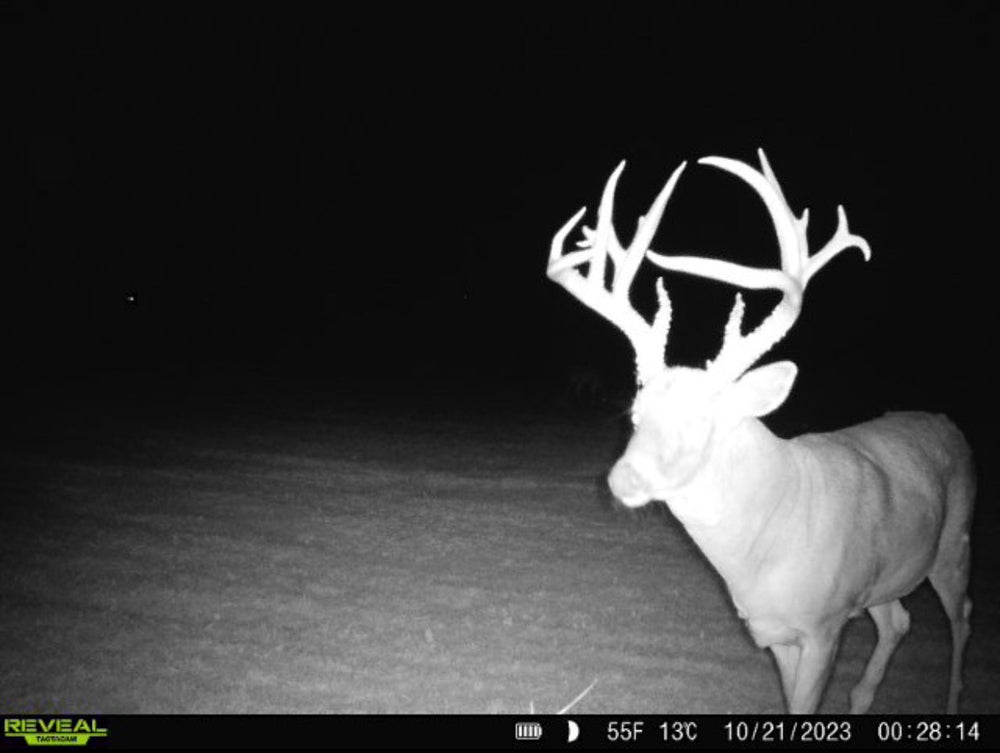
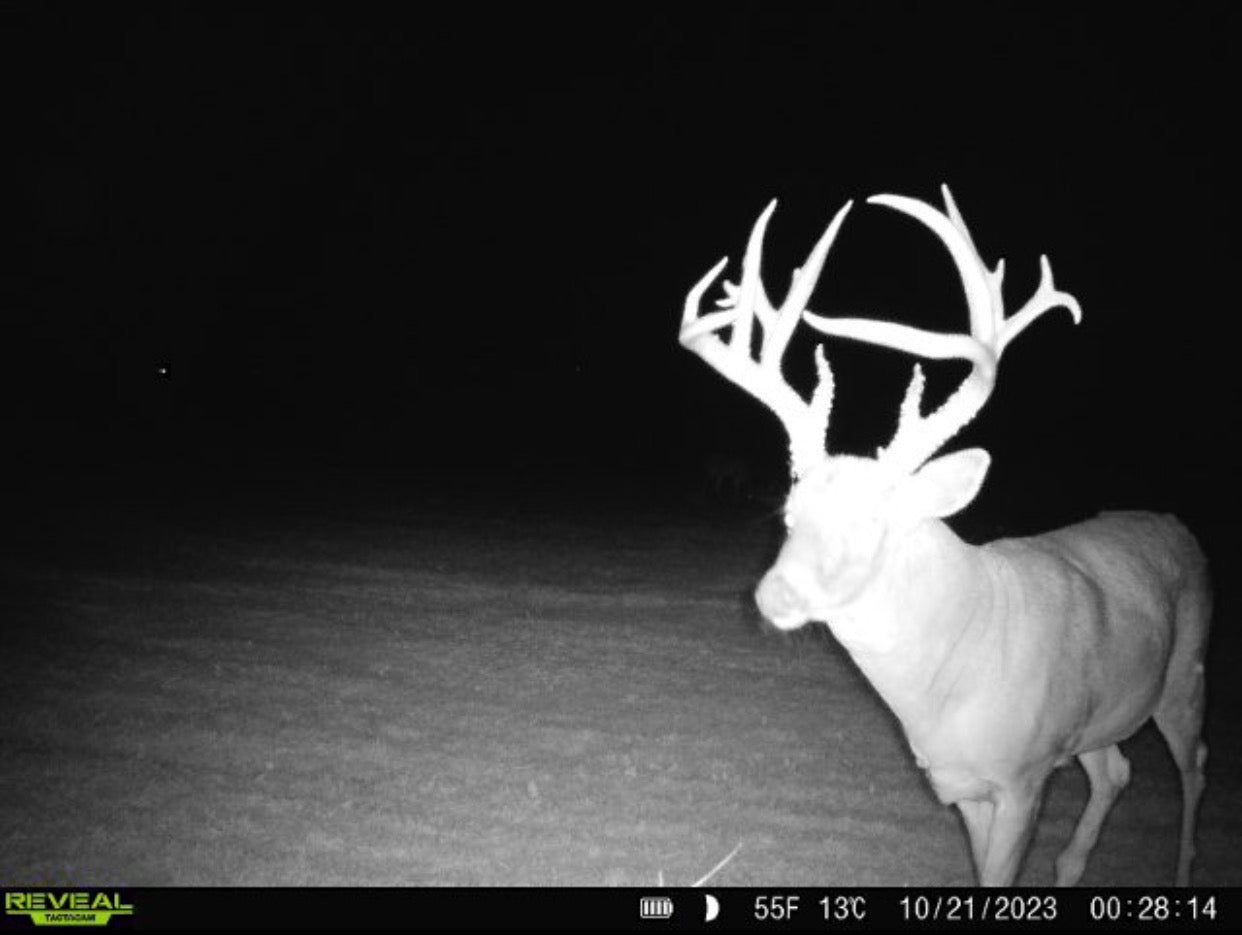
Why Mature Deer Start Making Mistakes
Not the chaos of the rut. The first crack in a perfect season.
All month he has been a ghost with a schedule. Same bed. Same food. Same strip of cover. You have him mapped close enough to taste it — and he still will not give you shooting light.
Then late October happens.
The woods have been quiet enough to lull you. This is the week the game actually changes. He does not blow up into November chaos. He just stops being perfect. He slips. He drifts. He steps out ten minutes early. He cuts a corner he would not have cut on the 8th. Mature deer do not suddenly get dumb. They make one small mistake. That is all this week is for — and all a hunter needs.
The Season Gets Under His Skin
The window matters because breeding season is no longer a rumor in his blood. Testosterone is climbing. Daylight movement ticks up. The airtight confidence he carried when the whole month was food, bed, and avoiding you starts to fray at the edges.
He is not reckless. Survival still wins most arguments. But survival now has to share the room with breeding, and that tension changes how he uses his feet. Scrapes get checked more often. A travel route slides a few yards. He stands up a little earlier in the afternoon because sitting still feels worse than it did two weeks ago. Watch the same deer long enough and you can feel it: same core, a little more fidget in it.
Favorable conditions pour gasoline on that restlessness. A good wind. Settled weather. A cold front that drops the thermometer overnight. None of those things turn him stupid. They give a restless buck permission to move while there is still light — permission he would not have granted himself in the first half of the month.
That internal clock is the whole story. Days get shorter. The rut gets closer. His body tells him to get active. You do not need him locked on does. You need him restless. Restless is when patterns bend.
The Pattern Does Not Break. It Wobbles.
Plenty of mature bucks can be patterned through October with almost boring consistency. If you have done the work, you often have a tight loop: bed, food, cover, repeat. By the last week, that loop develops a hitch.
The buck that has been arriving at last light shows a little earlier. The one that has been sliding out after dark pauses in a new spot. The deer that has hugged timber all month makes one bad call when the wind, the weather, and the hormones line up. He is still in the same core. The lines just blur.
Food still matters. It is no longer the only thing pulling. He may hit the same field or plot, but he arrives sooner, hangs later, or scent-checks the edge before he commits. He may change the door he uses by twenty yards — enough to turn a "close but no cigar" tree into a kill tree. He does not have to abandon the pattern. He only has to loosen it.
Evenings Are Where He Gets Caught
If he has been patternable, late-October evenings are when that pattern can bend into daylight. A good wind helps. Stable weather helps. A cold front helps. Stack any of that on rising hormone levels and you get a buck who feels bold enough to move while there is still color in the sky.
Mornings can produce. Evenings are where the pressure builds. He is feeding, scent-checking, trying to adjust to the season before the woods go crazy. That is when a deer who has been on rails all month breaks just enough to show himself. It may happen once. It may last four minutes. With a mature buck in late October, that is often the entire window.
In 2026, this last stretch of the month lines up as one of the strongest times to be in a tree. If you have a buck who has shown consistency, this is not the week to get cute or get bored. Lean on the setup. Trust the sit. Be ready for movement that happens earlier than the camera has been promising.
Wind Makes Him Gamble
Mature bucks live and die by the wind. Early in the month they can afford to be almost cowardly about it, because the food routine is that predictable. Late in the month their world starts to stretch. They get more willing to cross ground that does not feel perfectly safe — if the wind gives them an excuse.
They do not ignore danger. They start to bet a little. That bet is where you get paid. A route he would not normally use, because the breeze is in his nose. A field corner cut early. A transition line he steps into before you expected. A pause to scent-check an opening. Tiny changes. Those are the ones that end seasons.
Hunt the Edges — That Is Where the Mistake Lives
The more he is on his feet in daylight, the smaller his margin gets. A buck who has been robotic bed-to-feed all month suddenly covers extra ground, and every extra step is a chance to catch him wrong.
That is why this window hunts so well on edges: the lip of the food, the skirt of the bedding, the funnel, the corridor. Giants rarely make a huge mistake in the open. They make small ones on the boundary where security and opportunity overlap. A smart tree, a clean walk-in, the right wind — late October will hand you that overlap if you have not already burned the place down.
He is not fully consumed by chasing yet. That in-between is the gift. Active enough to show. Not so chaotic that the map is worthless. Hunters who wait for "real rut sign" often sit out the best chance they had at the deer they have been patterning since the opener. You still have structure. He is restless enough to slip. That combination is deadly.
Stay Patient. Stay Ready.
Late October is not fireworks. It is a hairline crack in a careful animal. Rising testosterone puts him on his feet. Daylight movement creeps up. A favorable wind gives him just enough confidence to drift or change doors. Survival and breeding pull at the same time, and for a few days he cannot be perfect at both.
He still feels old and wise. The season is getting under his skin anyway. He is not blown up. He is not as careful as he was on the 12th. For a hunter who knows what that looks like, that is the opening.
Late October is where a mature buck starts making tiny mistakes — and tiny mistakes are usually what end a giant's year.
Stay disciplined. Do not abandon a good plan because the sit went quiet on Tuesday. Be in the tree when the wind is right. Expect him a little early.
— Adam Hays III