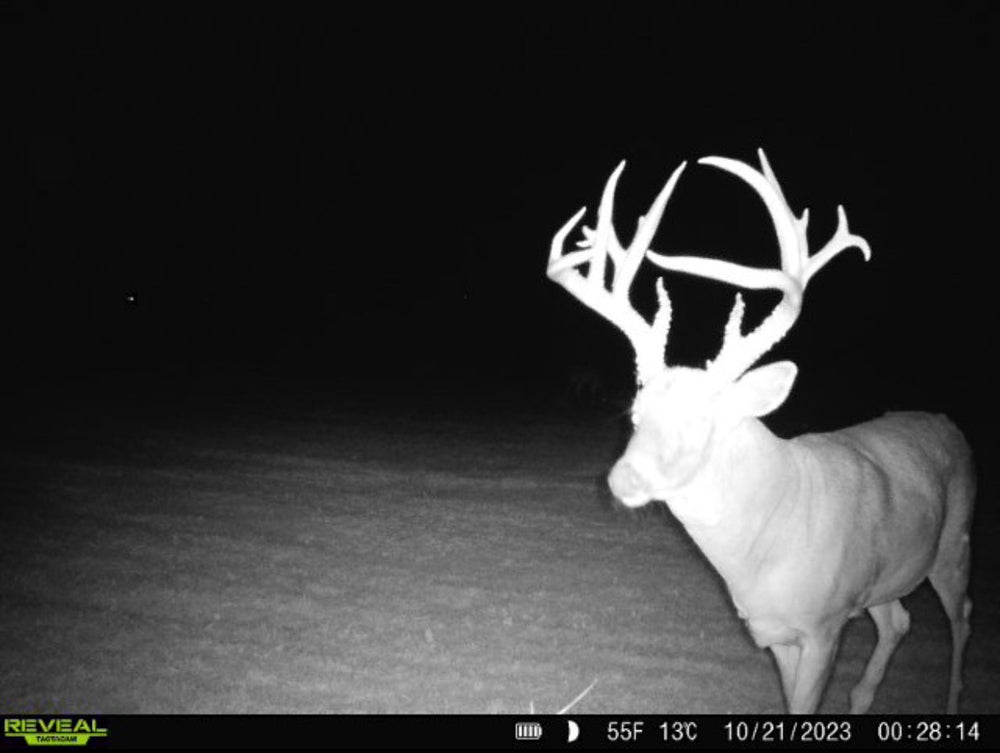
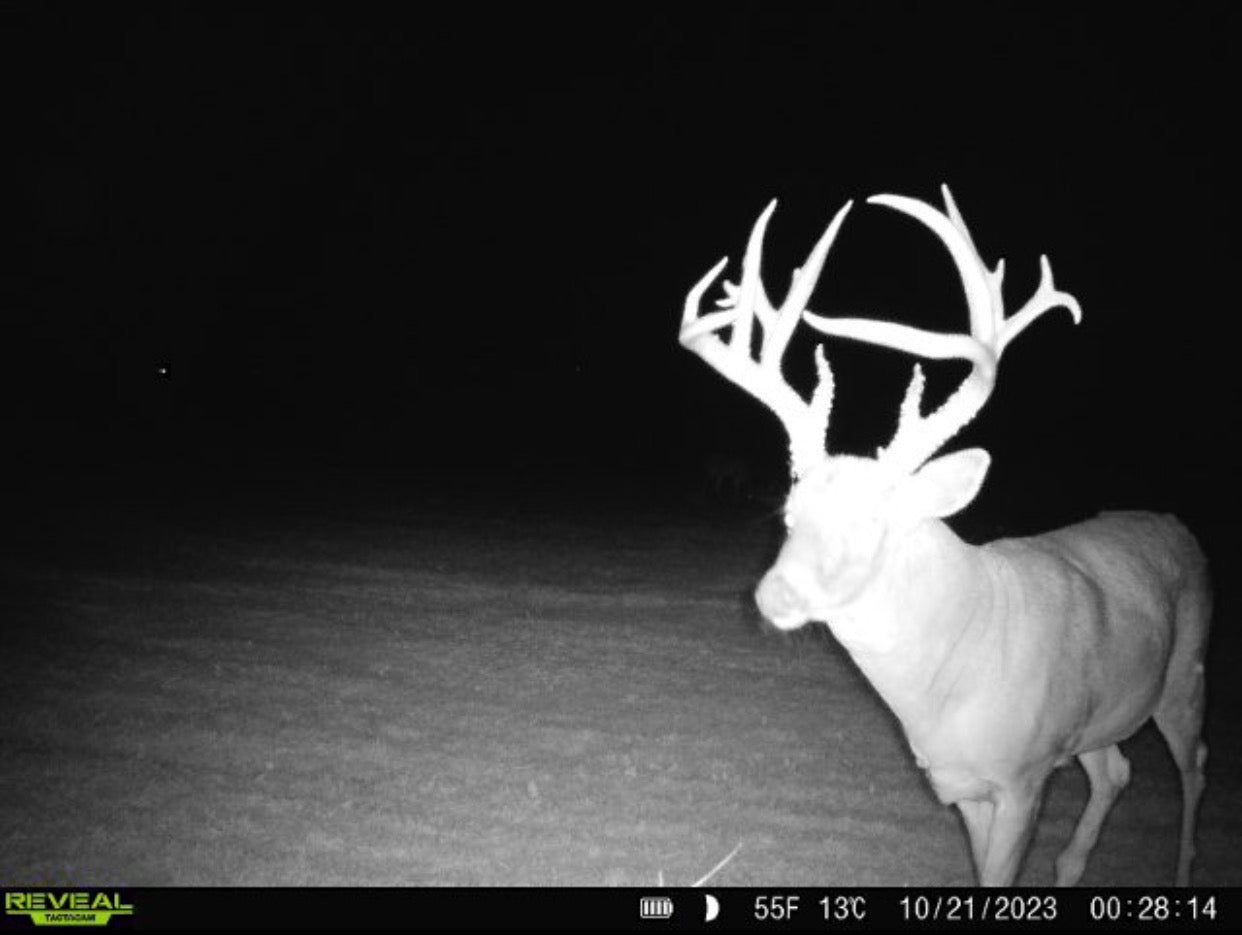
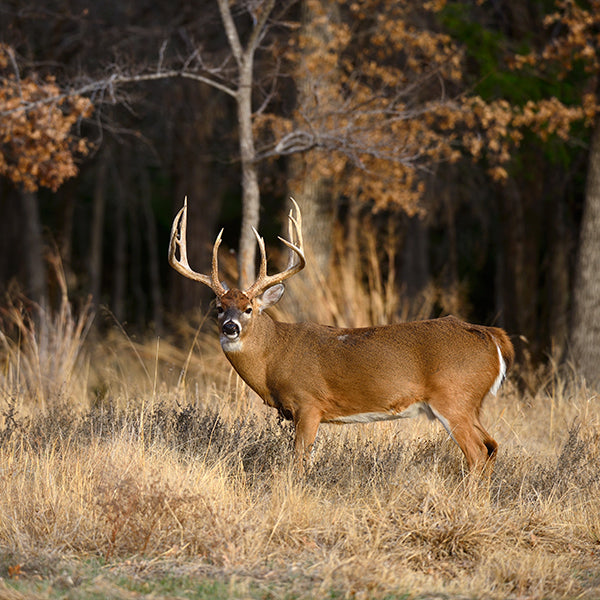
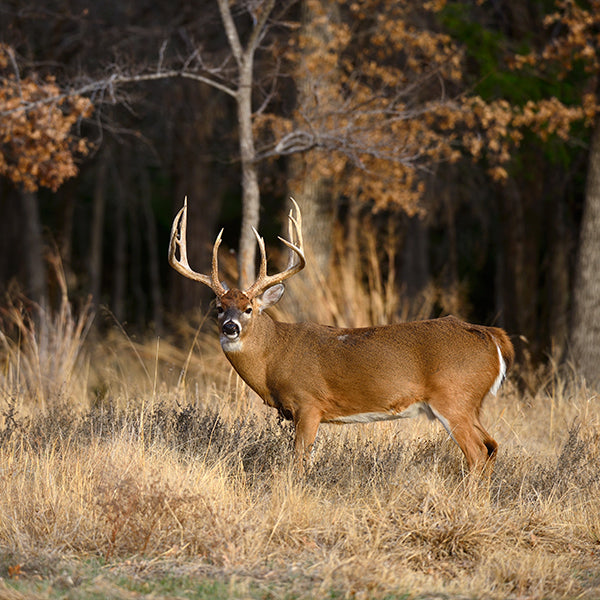
Food is the magnet. Pressure is the filter. Hunt where they overlap.
October does not starve deer. It sorts them.
Browse fades. Fields get cut. Acorns rain in one hollow and go silent in the next. The first wave of hunters walks in and the easy groceries get picked over. What is left is not "any food." It is the last source still worth a mature buck's time — calories he can reach without getting pinned.
That is the hunt. Not every bean field. Not every oak. The leftover high-value source, hunted from the edge, with enough discipline that he still feels safe walking to it in shooting light. Find that overlap of food and security and you can intercept an older deer that is still living on a feeding pattern — before the rut yanks the script out of his hands.
Why the Last Food Matters
Early October still carries a little summer in it. Movement can be cleaner than it will be later, especially before the pre-rut starts pulling bucks off their feet. Then the first real cool-downs hit, the first human scent hits, and deer stop wanting to stand in the open any longer than they have to.
So "last remaining" is not only about nutrition. It is convenience and safety stacked on calories. A buck will pick the source that gives him the best mix of all three.
A standing bean field tight to thick cover can be almost unfair. A small brassica plot tucked into bedding can light up once the woods around it go sparse. One ridge dumping mast while the rest of the timber is empty can become the center of gravity overnight.
When the woods shift, the deer vote with their feet. Your job is to read that vote before the rest of the county does.
Start With Mast — It Moves Fast
Mast is the most ignored October grocery store because it is inconsistent. One property is loaded. The next is dead. When acorns, beechnuts, hickories, persimmons, or apples are actually on the ground, they can yank deer out of the fields and keep them in the timber longer than most hunters expect.
White oaks usually win early — sweeter, lower tannins. Red oaks matter when whites are scarce or later as the menu changes. A heavy drop means a buck does not have to walk far. He can fill up inside the woods and never give you that pretty field-edge silhouette.
Do not just find oak trees. Find the ones dropping, then the ones getting hammered. Fresh caps. Torn leaves. Cracked shells. Tracks punched through the litter. Glass those edges from a distance when you can. If the sign is hot and the access is clean, you may have a sit without ever walking the core.
Ag Still Works — If You Hunt What Is Left
Beans, corn, alfalfa, waste grain — October still lives on farm ground in a lot of the country. The question is not what the field was in September. It is what the field still has.
Standing soybeans stay excellent when nearby browse is fading and pressure is light. Standing corn is better than people admit once hunters show up, because it is food and cover in the same strip. That combination is gold.
Harvest flips the board. Waste grain can keep them coming, but the pattern can jump 200 yards to a ditch, a cover strip, a different corner. Do not hunt "the field." Hunt how they enter and leave it. The edge is the money. The middle is a hope.
Look for the spots an older buck uses to stay just out of sight until dark:
- Corners that hook into thick cover
- Secluded benches and funnels off the field
- Creek crossings, ditch lines, fence gaps
- Trails that let him approach with cover at his back
Plots Kill When You Do Not Love Them to Death
When natural food gets patchy, a well-planted plot — winter wheat, oats, clover, chicory, brassicas, a good blend — can be deadly. The mistake is treating it like a guaranteed tree.
Blow deer out of a plot enough times and they come after dark, or they change the door they use. Mature bucks notice that fast. Hunt the edge or the travel route, not the bull's-eye. He may stage 50 to 150 yards back in the thick stuff and make the last move late. That staging cover is often the real stand.
If you have more than one food source, leave one alone. Let them settle. One overcooked plot can scramble an evening somewhere else on the same property when those deer get bumped and rewrite the map.
Hunt the Seam, Not the Buffet
October edge hunting is restraint. That is the difference between a two-day hotspot and a spot you can hunt for weeks.
The best trees sit where food, cover, and a clean walk-in all meet. Close enough to catch him before dark. Not so close that your entry or exit explodes the pattern.
Downwind when you can. Hidden access — terrain, timber, a ditch — not the same trail the deer own. Do not walk straight to the grocery if they may already be standing in it. One clean way in, one clean way out. Sit down when the wind or thermals are wrong instead of "just checking."
In hill country, thermals will beat a perfect forecast. Evenings often carry scent downhill. Mornings often raise it. If you are above bedding or below it, watch how the air actually moves, not just the flag on the app. Sloppy approaches do not always make a buck disappear. They make him nocturnal. Same result for a bowhunter.
Watch First. Hunt Second.
The smartest October food sit is often the one you do not take yet. Glass from a distance. Learn before you barge in.
On big fields and open hardwoods you can see a lot without being part of the story: first deer to show, where the does enter, whether a buck tags along later, which trails get daylight, how long they stay. If they snack and vanish early, you may need the staging area or the trail — not the food itself.
Cameras help when hanging one does not become its own hunt. Bump deer or paint the tree in scent and you change the behavior you came to study. Information that costs the pattern is not information. It is pressure.
Patience Is the Edge
The best October food source is often the one nobody else has leaned on yet. Do not dive on every fresh track or every pile of caps. Watch for consistent use. Confirm he is hitting it in legal light. Then move only when wind, access, and timing all say yes.
That is the real October advantage. They are still feeding. The smart ones are already acting like hunted deer. Find the last high-value source and hunt it like it can disappear tomorrow — because if you get greedy, it will.
Food pulls them. Pressure sorts them. Slip into the overlap without tipping the scales, and an older buck still living on a feeding pattern will eventually give you the daylight mistake you came for.
— Adam Hays III