A bowhunter's case for hunting one deer — not just hunting deer.
If I had to pick one month that gives a bowhunter the best chance at a specific mature whitetail, it would be October — hands down. Not November, when the woods go chaotic and bucks can appear anywhere at any time. October is the month a mature buck still lives on a schedule. He still moves between bedding and feeding with a rhythm you can study, trust, and hunt.
That is what makes the month special. You are not just deer hunting. You are hunting one deer.
That distinction changes everything. Scouting gets sharper. Setups get smarter. Patience improves. You stop wandering the property hoping to get lucky and start making decisions based on where one animal beds, feeds, and travels. October rewards that kind of hunting.
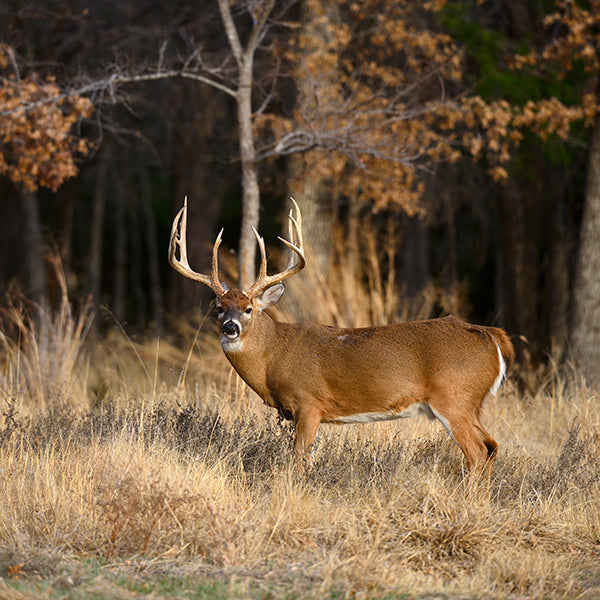
A mature buck in early October is still a homebody. He is using his core area and is not yet fully pulled apart by breeding chaos. In most country he is moving between bed and feed with enough consistency to be one of the most patternable animals in the woods. That does not make him easy. Mature bucks never are. It does make him vulnerable if you understand his world better than he understands yours.
The Pattern Is Still Intact
October stands out for a simple reason: the routine is still there.
Early in the month, a mature buck is focused on food, cover, and security. He beds where he feels safe and feeds where the nutrition is high and the risk is low. When pressure is light and weather stays reasonably stable, those daily movements often follow the same general lines.
This is observation hunting. If you can locate the bed, the food, and the path between them, you have the bones of a kill plan. Patterning is not guessing and it is not hoping. It is learning a routine well enough to intercept the deer before he knows you exist.
Later in the month, as pressure builds and the first hints of the rut arrive, that structure begins to loosen. Early October is the cleanest window because the buck's life is still organized around predictable needs. He is not wandering the countryside looking for does. He is living in a smaller world — and a smaller world can be hunted.
Hunting One Buck Changes the Way You See the Woods
There is a wide gap between hunting deer and hunting a deer.
When you hunt "deer," the strategy stays broad. You sit a travel corridor, an oak flat, a food source, or a bedding edge and hope something mature shows. That approach kills plenty of good bucks. If the goal is one specific animal, though, the approach has to tighten.
Treat him like an individual. His habits matter. His preferred wind matters. His exact bedding cover matters. The trail he chooses when conditions are right matters. The hour he stands up and starts feeding matters. Details that would be noise on a general hunt become the whole hunt.
That focus is the October edge. A mature buck may keep a fairly consistent routine, but he is also wary. He will notice sloppy hunting long before you ever see him. Hunt without a specific deer in mind and it is easy to get lazy with scouting or careless with a setup. Commit to one buck and you start seeing the timber the way he does. That is when the hunt gets real.
The Hunt Is Won on the Ground
October success starts long before you climb a tree.
Targeting a specific buck means learning the ground — terrain, sign, cover, wind, and topography. Driving past a field and spotting deer is not scouting. Walking the property until you understand how that buck stays alive is.
Start with the basics: fresh tracks, droppings, rubs, scrapes, and trails that show repeated use. Then connect them. A single rub means little. A chain of rubs along a funnel, a trail that skirts bedding cover, or a feeding route between security cover and a food source tells you how he uses the place.
The best October work centers on bedding-to-feeding movement. Where does he bed when the wind is right? Which way does he leave when he rises? What food is he favoring? Does he move early, or does he wait until the last possible minute? Those are the questions that matter.
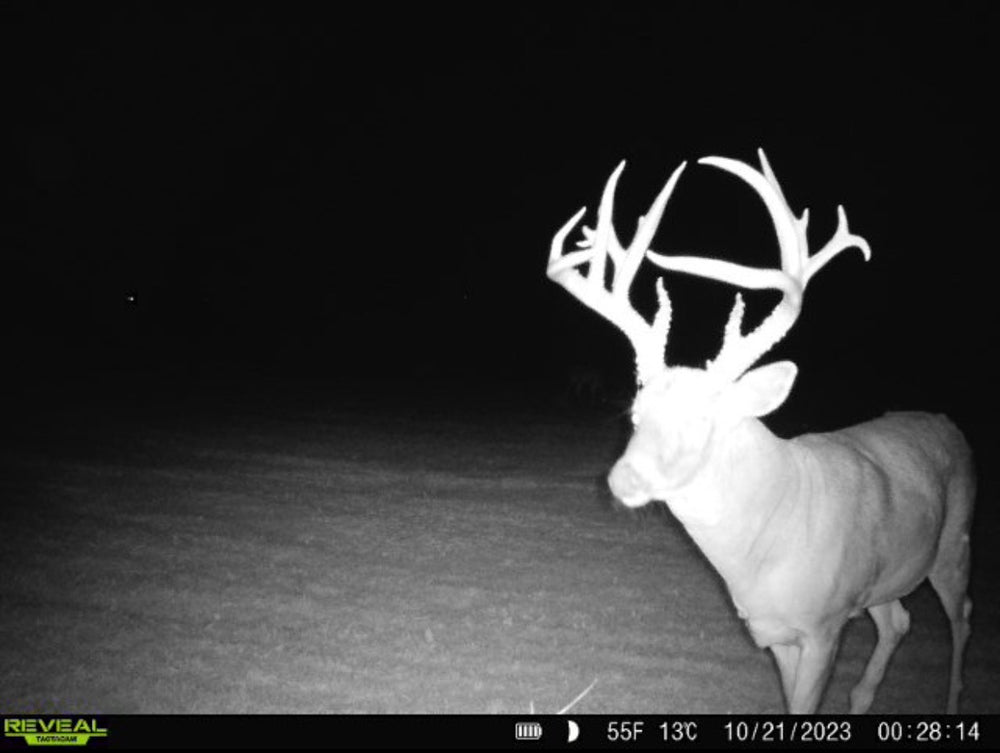
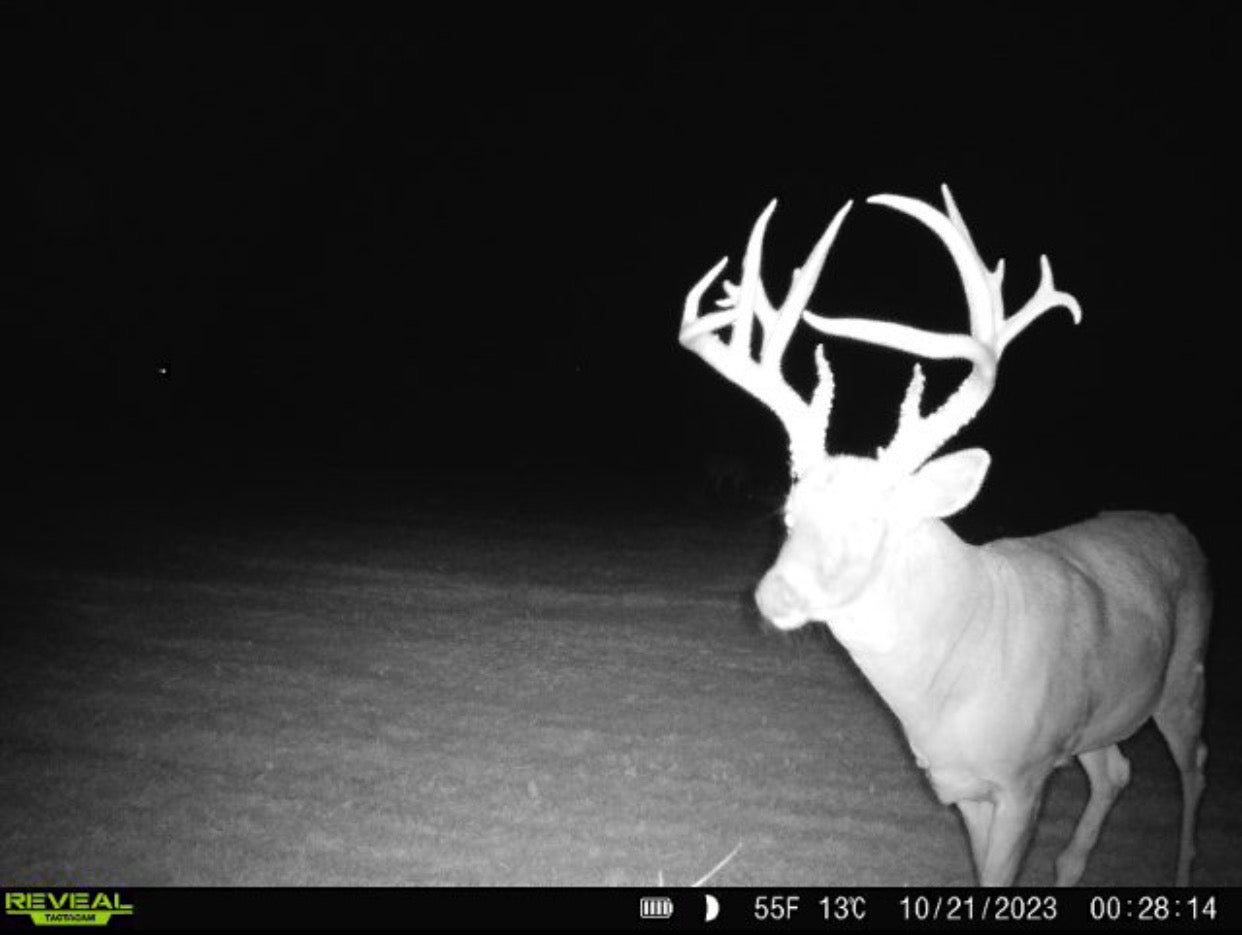
Trail cameras help when they are used with some discipline. A good cellular camera can confirm when he is moving, what time he is active, and whether he is still on a pattern. The camera should confirm what your boots already told you. It should support the plan, not replace it.
Bedding Is the Backbone
If you want to kill a buck in October, you have to understand bedding.
A mature buck's bed is not random. He chooses it for visibility, wind advantage, escape cover, and comfort. He wants to smell danger before he sees it and see trouble before it gets close. That is why beds so often sit in thick cover, points, side hills, nasty tangles, cattail edges, or overlooked pockets of security cover where he can monitor the approach.
Find the bedding area and you are halfway home. The mistake a lot of hunters make is rushing in too close. They get excited by sign and overhunt the spot. In October, pressure can ruin a pattern fast. Mature bucks do not tolerate repeated intrusion. If he smells you, hears you, or simply senses that the area has changed, he may shift beds or go nocturnal before you ever get a shot.
The better move is restraint. Locate the bed. Learn the wind he prefers. Identify his exit and the food he is likely using. Then set up outside his comfort zone, not inside it.
Food Tells You Where He Wants to Be
Early October is still a food month, and that is another reason it hunts so well.
A mature buck is often locked into a feed-to-bed pattern when the food is predictable. In farm country that may be cut corn, soybeans, alfalfa, or a neighboring plot. In timber it may be mast, browse, or whatever the acorn drop and early seasonal change have put on the menu.
What he is eating matters less than when and how he gets there. Some bucks stage in thick cover before they step into a field. Others feed in the timber well after dark and are back in their bed before first light. Some use a food source only on certain winds or after pressure changes.
That is why field-edge hunting is often overrated unless you already understand the movement. A big buck rarely behaves like a doe family group. He may not hit the field until very late, or he may use a hidden route that keeps him out of sight the entire way. Know that route and you have a chance. Don't, and you are hoping.
Wind, Thermals, and Pressure Decide the Hunt
No October conversation is complete without wind. A mature buck does not survive by accident. He survives because he uses air movement as a security blanket.
He will often use certain routes only when the wind favors him. He may bed with the breeze in his nose and a view of the approach off his front or side. He may feed on one source only with a particular wind. Good scouting makes that pattern visible. If the wind is wrong, the hunt is probably wrong.
Thermals matter just as much in hill country and timber. Morning air often pulls scent downhill. Evening thermals may rise. Set up without understanding how air moves on that piece of ground and you can blow a buck out before he ever gets close.
Pressure is the third piece. Early October can still offer a window before bucks have felt much intrusion. Once a property gets hunted hard, mature deer adapt quickly. They move later, use thicker cover, or shift travel just enough to become difficult to target. That is why restraint pays. One smart hunt beats three careless ones.
Why Waiting on the Rut Can Cost You the Deer
A lot of hunters assume the rut will be their best shot at a giant. Sometimes that is true — if you are willing to hunt a general area and accept a more random opportunity. If the goal is a specific deer, October usually gives you a better chance to plan the ambush.
Before the rut, a buck is still acting like himself. He is in his home range. He is on a more stable schedule. He is not roaming miles away chasing does and throwing the pattern out the window. That makes him a better target for a hunter who has done the homework.
Once rut behavior takes over, predictability drops. You may still kill a giant, but the hunt becomes less about patterning one buck and more about being in the right place at the right time. That is a different game.
In October you can often build a plan around known movement. You can choose your entry, set your stand, pick your wind, and time the sit around a feeding window or a travel corridor. You can hunt intelligently instead of simply hunting hard.
Patience Is a Weapon
October demands patience, and that is one of the hardest lessons in the sport. Find a big buck and every urge in your body wants you in the tree right now. Impatience kills more October setups than bad luck does.
A mature buck detects pressure quickly. Rush the wrong place on the wrong wind and you may get one chance — and lose it. The best hunters know when to sit back and gather more information, when to hunt a stand, and when to leave a spot alone until conditions are perfect.
The woods do not reward emotion. They reward discipline.
The Best Hunts Are Built on Details
When I look back at the biggest bucks I have been fortunate enough to take, there is almost always a common thread: I knew what the deer was doing before the hunt happened.
That does not mean it was easy. It means the work was done in advance. I knew the area, the food, the bedding, the wind, and the sign he was leaving. And I knew enough to wait for the right moment. That is the kind of hunting October makes possible.
If you want a specific buck, this is the month to commit. Use the early season to learn his world. Watch how he moves. Study how he uses cover. Pay attention to what changes after pressure. Then hunt him with purpose, not guesswork.
Final Thoughts
October is the best month to target a specific buck because it offers a rare mix of predictability, vulnerability, and opportunity. Mature bucks are still tied to feeding and bedding patterns. They are still living close to home. They are still patternable enough to hunt with a plan.
That is the magic of October. It is not the loud chaos of the rut. It is the quiet advantage of knowing one deer better than anyone else in the woods — scouting with discipline, setting up with precision, and waiting for the right wind on the right day.
For the bowhunter willing to do the work, October can be the month that changes everything.