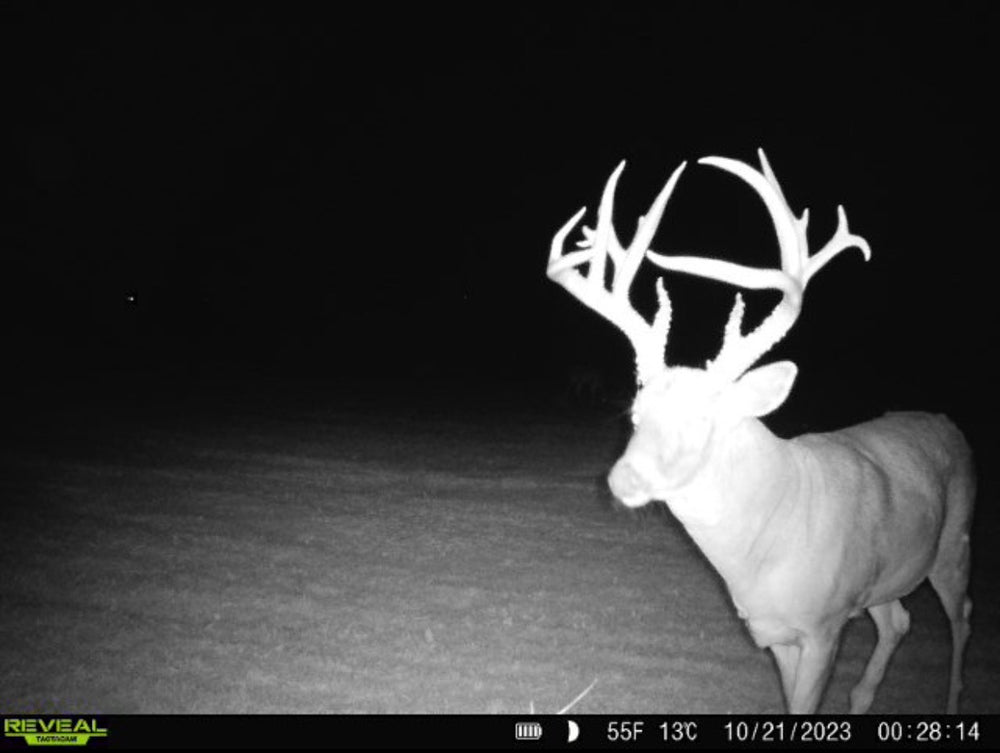
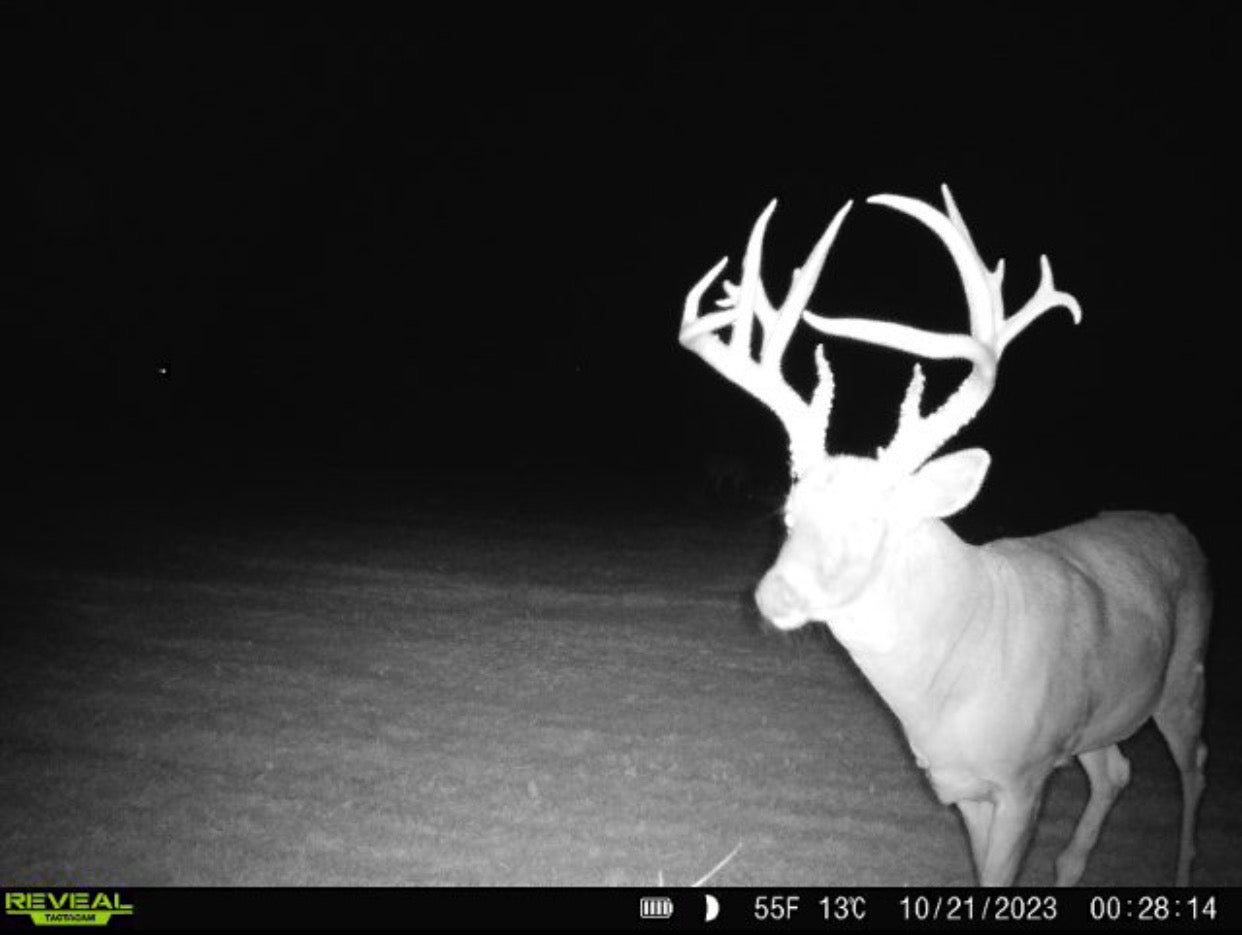
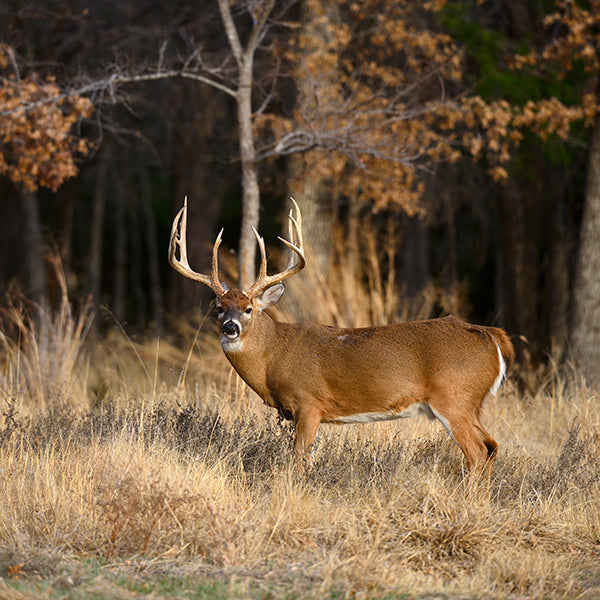
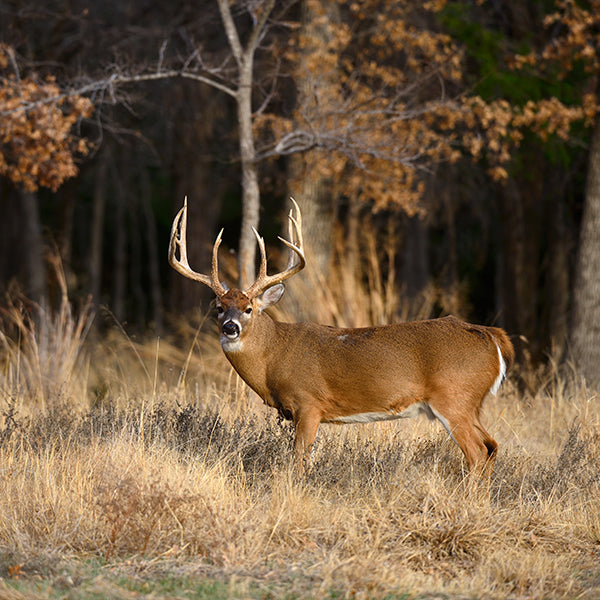
Logan Hays with an opening week giant — opening week is a great opportunity to catch a mature buck with his guard down if you've done your homework.
Summer scouting only pays off if you turn it into a real plan for the opener. By late summer, you should have a good feel for where the deer are bedding, where they're feeding, and how they're moving between the two. The goal now is to narrow all that information down to one or two high-percentage setups, not to overcomplicate things with too many options.
Start with the bedding-to-food pattern. Most opening day deer movement comes from the same basic equation: deer leave bedding cover and head toward a reliable food source. That might be soybeans, corn, acorns, a water edge, or a green food plot depending on your area. Look at your summer observations and trail camera photos to find the trails they prefer, especially the ones used during daylight. If a buck is showing up on a field edge at last light in July and August, there's a good chance that trail or travel corridor deserves a hard look for opening day.
Match That Movement to the Wind
Next, match that movement to the wind. A great spot can be worthless with the wrong wind, and a mediocre spot can become deadly when the wind is right. Focus on setups where the expected bedding-to-food route gives you a clean wind advantage without blowing your scent into the bedding area or across the main travel line. On opening day, I'd rather hunt a slightly less obvious stand with the correct wind than force a premium location and educate the deer.
Access is just as important as the stand itself. If you can't get in and out without being detected, the setup isn't ready yet. Use the summer to trim a quiet route, mark your entry, and think through where deer are likely to be feeding at first and last light. The best opening day setups are the ones you can slip into without crossing the deer's bedroom or walking through the area they use as they stage before dark.
Know When to Leave a Spot Alone
Finally, know when to leave a spot alone. If you've got a high-confidence setup and the sign is fresh, resist the urge to overhunt it. One or two sits at the right time are worth far more than burning the spot by hunting it too often. In most cases, the best plan is to save those top stands for the right wind first, on a night where you either have the Red Moon on your side, or a weather pattern that will increase activity like a cold front or an afternoon shower. If I don't have at least 2 of the 3, I will wait to hunt the stand and just observe from a safe distance. If you get all 3 on the same night, you HAVE to be there!
"Always place a trail camera near your treestand in bow range and preferably on the trail you expect your target animal to use. This will help verify he uses the trail, what wind he prefers to use and you will know when he is there and killable!"
The Bottom Line
The bottom line is simple: use your summer notes, camera data, and field observations to identify the main travel route, confirm the right wind, and build a silent access plan. Do that, and you'll walk into opening day with a plan instead of a guess. All of your scouting will tell you WHERE to be — let the key factors that determine increased activity like the wind, weather and moon tell you WHEN to be there!